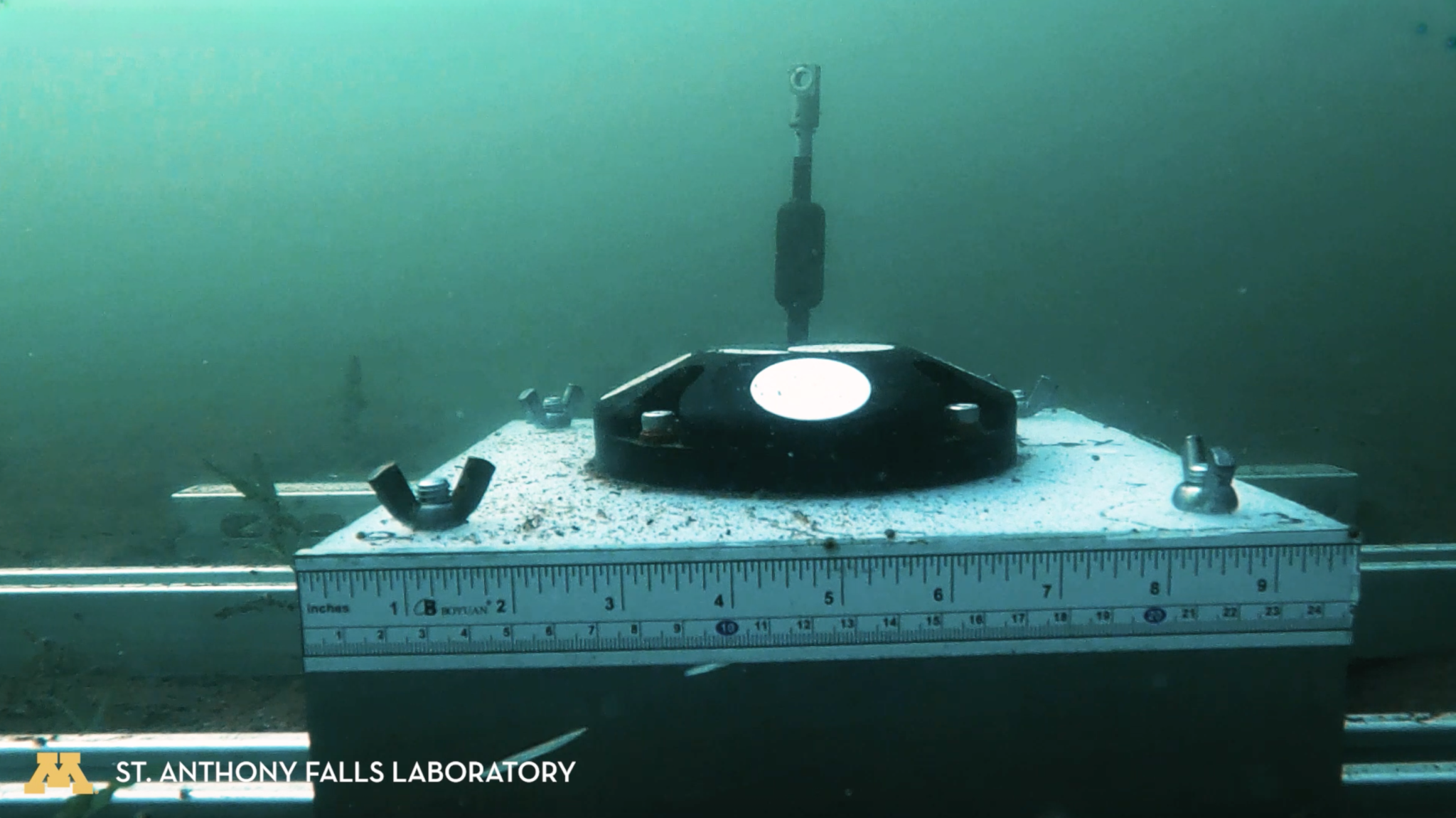
University of Minnesota study uses Signature ADCP to investigate the impacts of recreational powerboats on inland lakebeds
- User stories
Wakesurfing and other water sports are popular with recreators in Minnesota. In the “land of 10,000 lakes,” many Minnesotans want to ensure these lakes remain healthy and protected. New, increasingly popular wakesurfing-specific boats are known to create waves and disturb lakebed sediment, causing issues for swimmers and anglers, decreasing water quality, causing damage to docks or other structures, or eroding shorelines. The impacts from these wakesurfing boats are far greater than the impacts of typical recreational boats that have been used for decades for other tow sports such as water skiing and tubing.
Researchers at the University of Minnesota, St. Anthony Falls Laboratory (SAFL) recently published a much-anticipated study investigating the impact of these wakeboats on lakebeds. They used a Nortek Signature 1000 and Nortek Vector to quantify the water velocities and sediment plumes created by recreational boats, including wakesurfing boats. As part of the Healthy Waters initiative, the researchers set out to create science-based guidance for where these boats can be safely operated to ensure minimal disturbance to the lakebed.
Testing the impacts of wakeboats and other recreational boats in multiple conditions
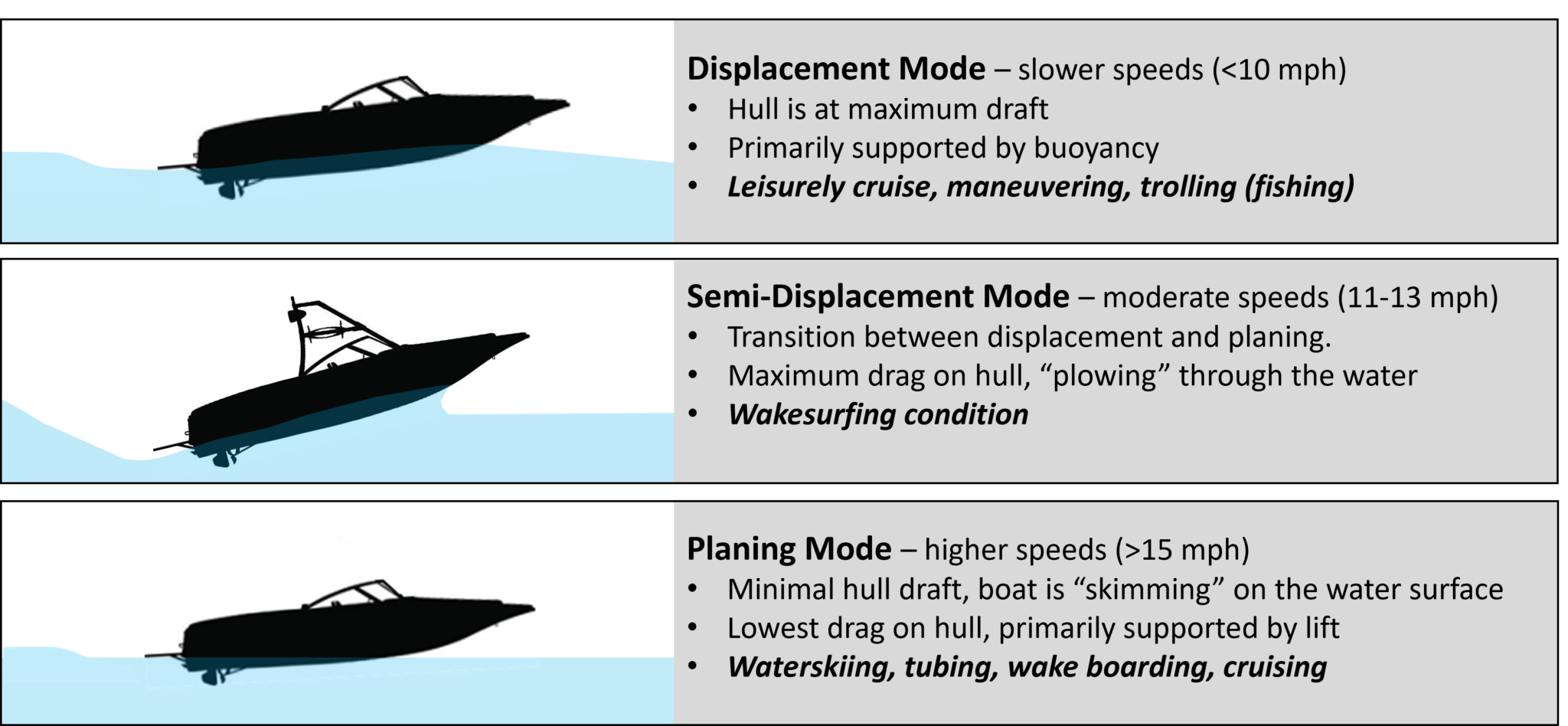
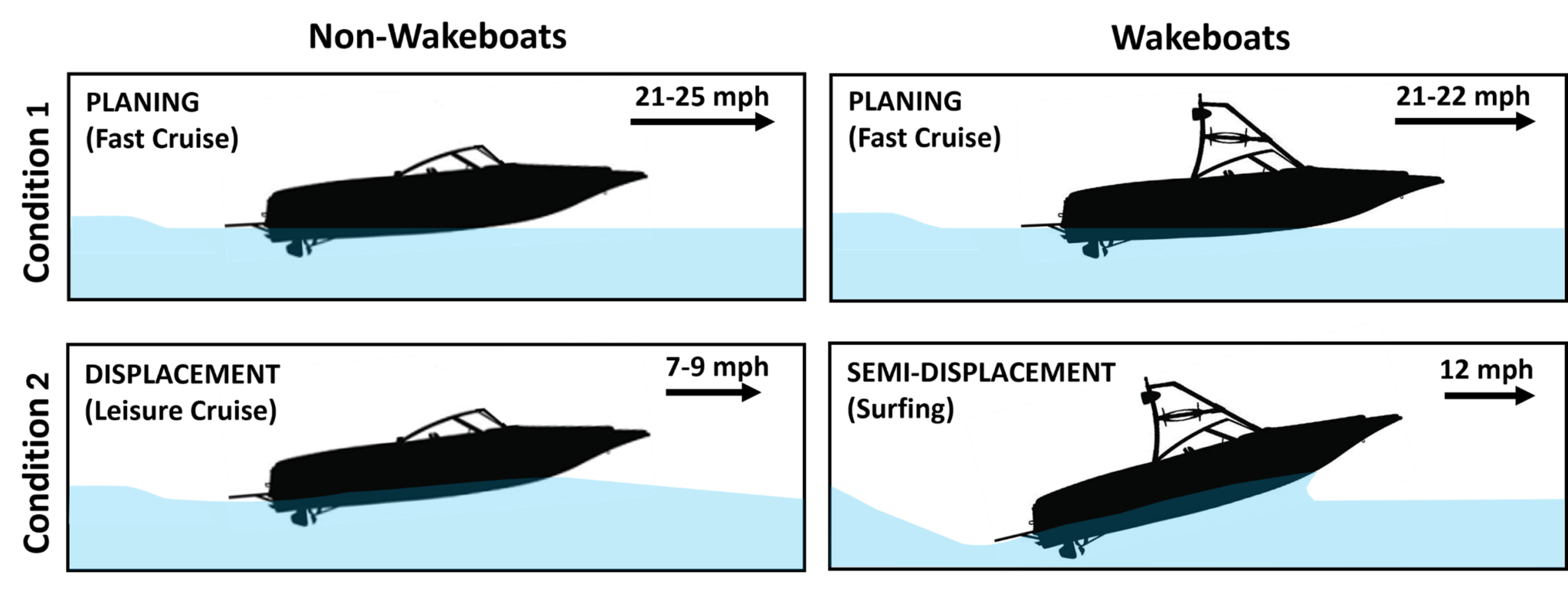
The researchers tested three popular types of recreational boats, broken down into wakeboats and non-wakeboats. Both boat types were tested under two conditions. For wakeboats, the two conditions were “planing,” i.e. fast cruising, and “semi-displacement mode,” i.e. “surfing mode.” This semi-displacement mode used by wakesurfers is what creates the larger, more powerful waves that lead to more environmental damage.
For non-wakeboats, the two conditions were “planing” i.e. fast cruising, and “displacement mode” i.e. slow crusing. Non-wakeboats do not operate in semi-displacement mode, and are therefore less likely to cause damage.
These different conditions covered a broad spectrum of the different ways these different boats move water as they move through the lake.
Setting up tests in a Minnesota lake
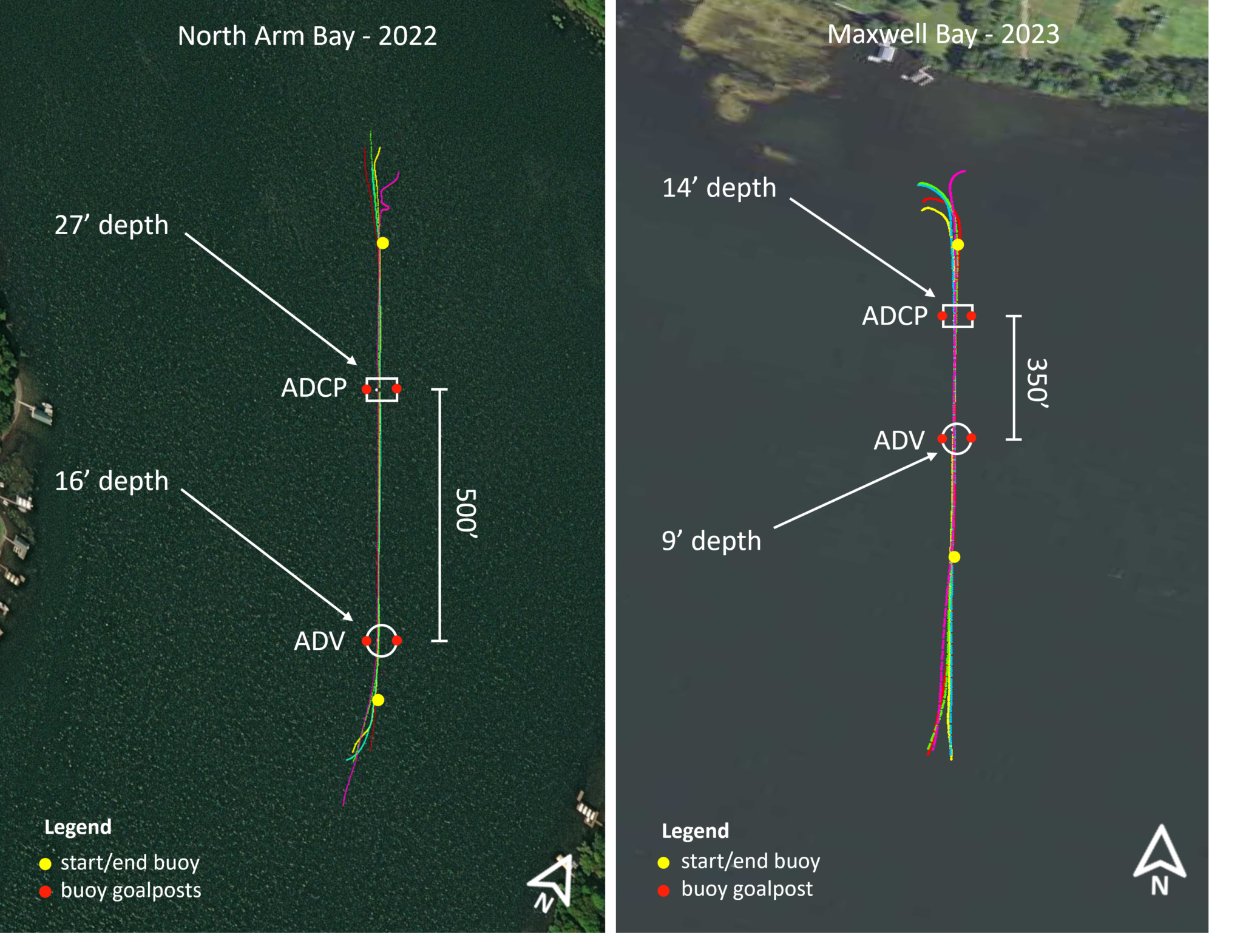
To better understand how these different boats and operating conditions impact aquatic vegetation and lakebed sediment, the researchers set up test sites in Lake Minnetonka, a popular lake for recreation about 15 miles west of Minneapolis. They selected several sites in the 14,000-acre lake which were tested during two field campaigns in 2022 and 2023. The 2022 site had Nortek sensors at 27 ft and 16 ft depths, and the 2023 site at 14 ft and 9 ft depths.
The sites were set up for each boat to drive in a straight line along a pre-set track. Directly below this track was an up-looking Nortek Signature 1000 ADCP and a down-looking Nortek Vector velocimeter. Red buoys were attached to the frames these sensors were deployed on, acting as “goalposts” for the boat driver to drive through which ensured the boats were driven directly over the sensors on each pass.
Using ADCPs and velocimeters to quantify water movement, exhaust bubbles, and resuspended sediment
The Signature 1000 ADCP sat on the lakebed looking upward. The Signature 1000 is unique in its ability to not only measure current velocity profiles in the horizontal and vertical direction like a traditional ADCP, but also capture echograms. This enabled the researchers to measure the water column velocities, as well as the extent of the boat’s exhaust bubbles and potential to resuspend sediment.
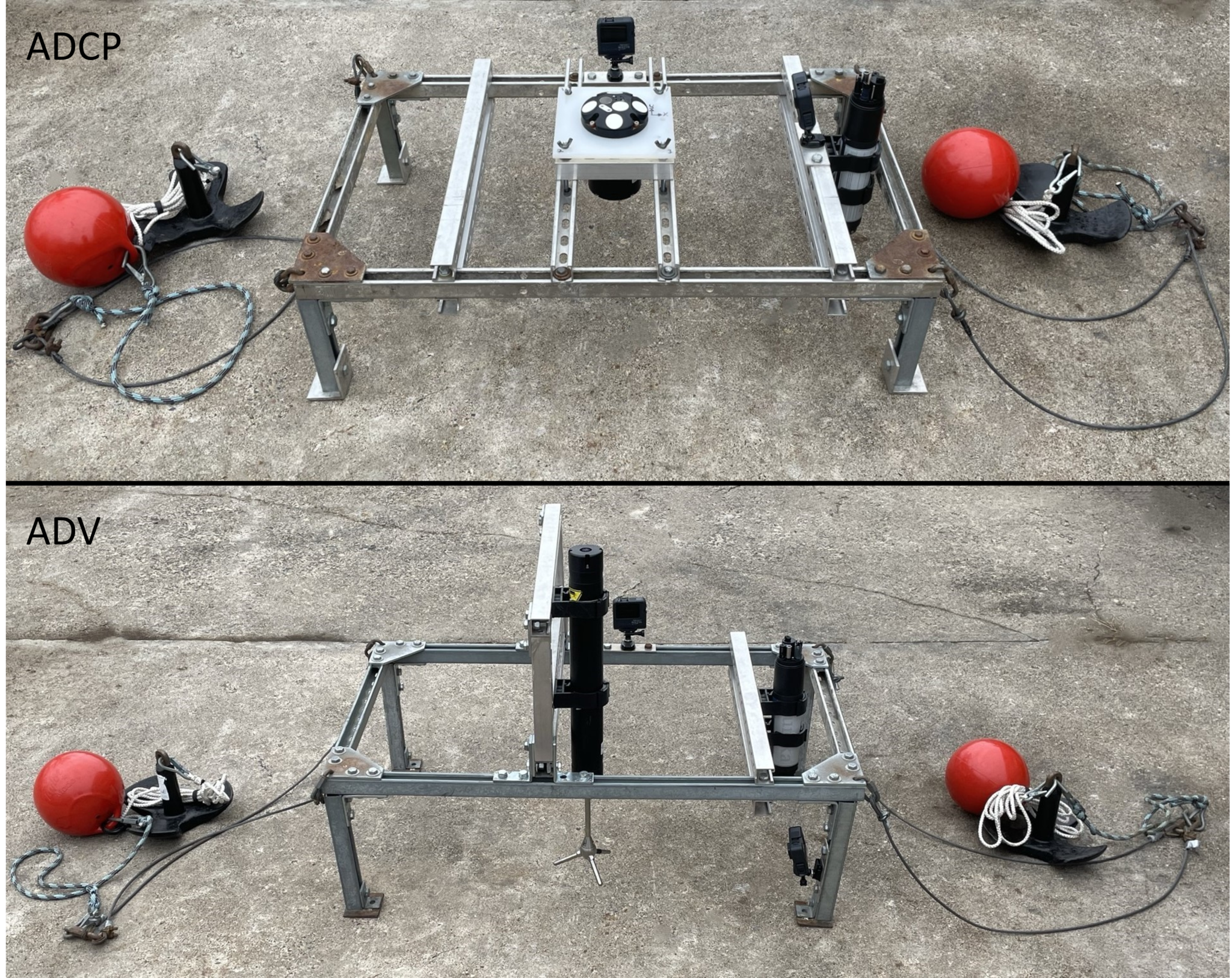
The Signature was set to measure water velocities in 5 cm bins (“layers”) in 2023 and 2 cm bins in 2022, resulting in a fine-scale picture of the generated velocities throughout the water column. The Signature’s vertical beam captured the echogram data, while all beams were simultaneously used to measure water velocities.
“The echogram capability of the [Signature] ADCP was able to detect a strong signal from entrained exhaust bubbles as well as the suspended sediment in the water column,” said Jeffrey Marr, Associate Director of Engineering and Facilities at the UMN SAFL.
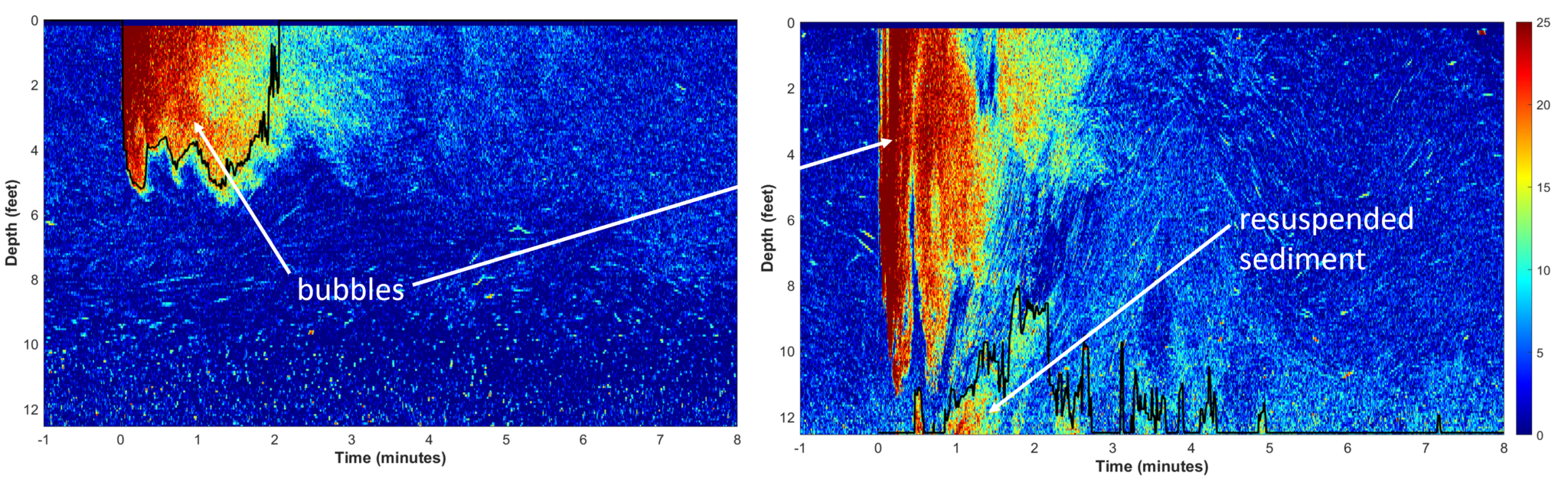
The team used the echogram from the Signature ADCP to investigate the bubble plume and sediment plumes created by the boats, and visualize the sediment kicked up by the boat off the lakebed. Being able to collect multiple parameters from a single instrument was a benefit to the researchers.
“Having the ADCP be able to collect both velocities and echograms was beneficial,” adds Andrew Riesgraf, Laboratory Research Scientist at SAFL and lead author of the study. “Most important was its ability to ‘look’ at the entire water column. This allowed us to look at the penetration depth of water velocities and resuspend heights of sediment over time.”
The team additionally used a Nortek Vector velocimeter to measure water velocities just 4 inches off the lakebed. Unlike the Signature, which was used to measure velocities through the water column, the Vector measures a sampling volume the size of a marble, but at rapid speed (32 Hz). This provides a very in-depth picture of the horizontal flow occurring close to the lakebed, which can inform the potential for various lakebed sediment grain sizes to shear (move along the lakebed) or resuspend.
Measuring waves and current velocities from different phenomena
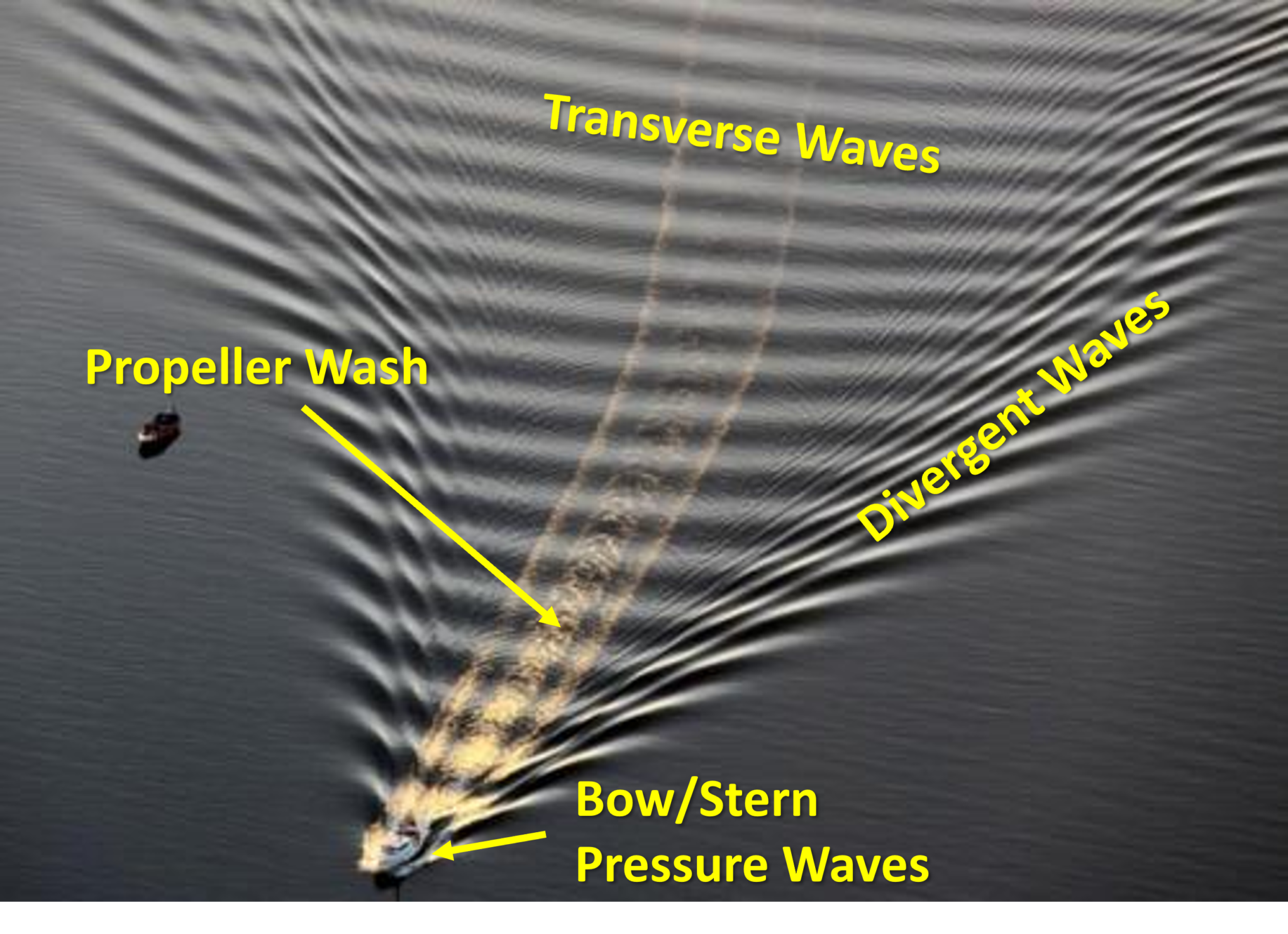
As these boats move through the water, different hydrodynamic phenomena occur. The bow of the boat pushing through the water creates an initial “bow pressure wave;” this causes water to rebound behind the stern of the boat in the opposite direction, termed the “stern pressure wave”. The boats also generate transverse waves, waves that move in the direction of the boat path. Additionally, the thrust from the boat’s propeller creates turbulent water directly behind the boat, known as propeller wash.
The researchers developed methods to decouple the velocity signals of the propeller wash and transverse waves. Being able to measure and differentiate these three main phenomena generated by the boat’s movement is a key element of understanding their impacts on the lakebed.
Sediment disturbance in shallow waters caused by hydrodynamic motion
As anticipated, the hydrodynamic phenomena created by the boats was found to cause disturbances to the lakebed and lasting current and wave velocities after each pass. Each phenomenon has a different effect on the lakebed.
“The bow and stern pressure waves are the primary phenomena that initiate the movement of lakebed sediment,” says Riesgraf. “The bow and stern pressure waves happens really quickly, on the order of seconds. This is what initiates the lakebed to move. But it’s really the transverse waves and propeller wash that are able to lift and entrain that sediment into the water column.”
According to the study, the bow and stern waves are the primary phenomenon that initiates sediment movement but are not sufficient to cause sediment suspension. However, the velocities generated by the transverse waves and propeller wash are large enough to resuspend and entrain the sediment into the water column. Finally, propeller wash was found to directly cause shearing and uprooting of aquatic vegetation under certain conditions.
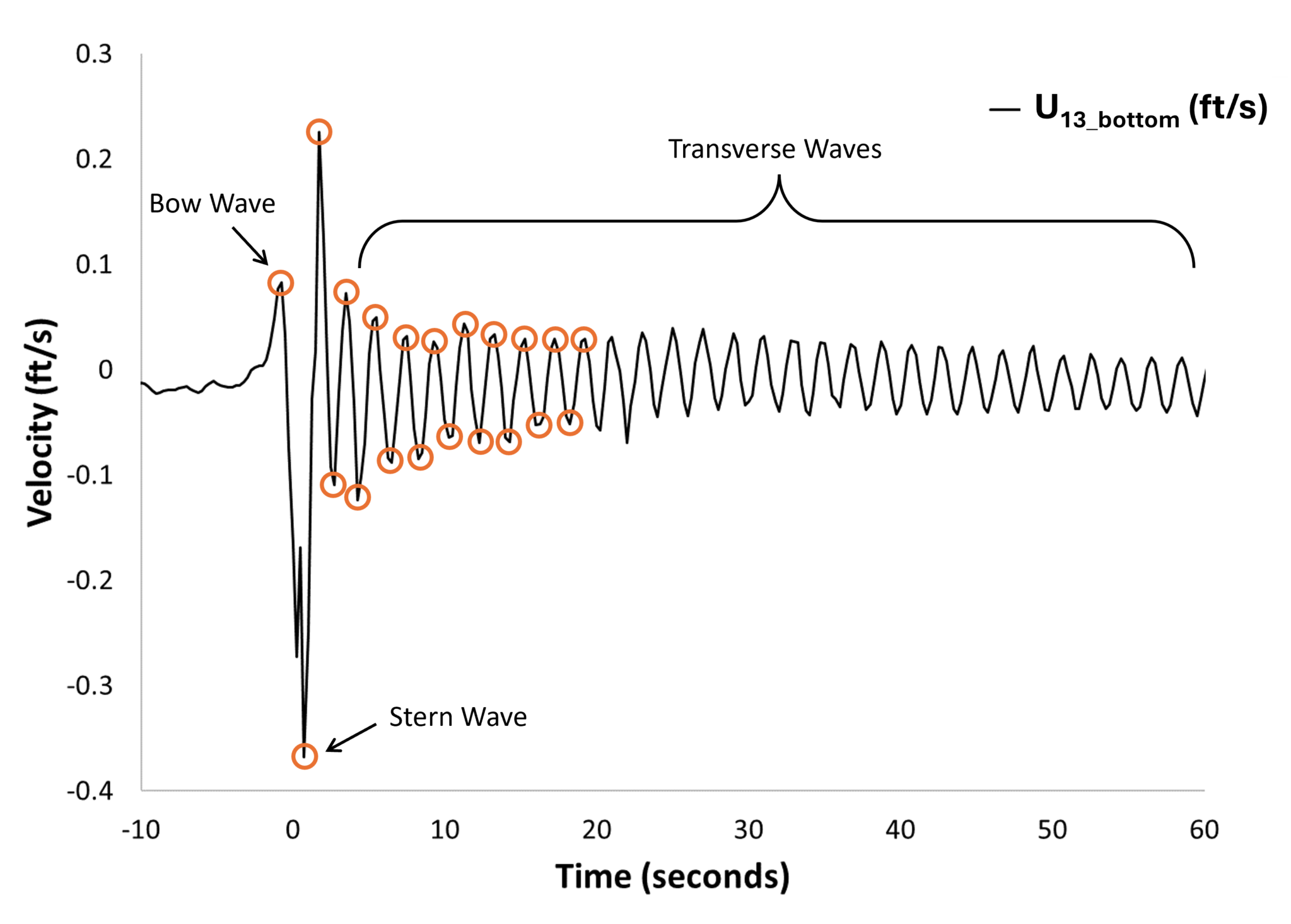
Information from the ADCPs as well as GoPro camera footage were used to investigate how sediment was moved and suspended in the water column, and to correlate this movement with the type of hydrodynamic motion occurring. For example, ADCP data showed a series of oscillating current velocities, representing the transverse waves, for several minutes after the boat pass.
After a pass of a wakeboat in surfing mode, echograms and GoPro footage showed sediment resuspension up to 6-8 ft in the water column. Sediment disturbances were most prominent at the shallower water sites, with no sediment resuspension shown at the 27 ft depth site. Underwater GoPro footage and an overhead drone showed sediment still suspended in the water column more than one hour after the wakeboat pass.
According to the report, wakeboats operating in “condition 2,” or “surfing mode,” had the greatest impact on the lakebed.
Connecting data to offer recommendations to minimize lakebed disturbance
By investigating and identifying different hydrodynamic phenomena, quantifying the water velocities and sediment resuspension and entrainment created by each, and breaking down boat types and boat operating modes, the researchers were able to draw conclusions on best practices to avoid lakebed disturbance.
“This field study generated a lot of data sets with each having limitations,” says Riesgraf. “But if you look at all the data, we do see multiple lines of evidence that can be used to inform science-based guidance for the minimum water depth that recreational powerboats, under their typical modes of operation, should maintain to minimize negative lake impacts.”
The researchers concluded their findings with a series of recommendations for boat operators to best avoid disturbing the lakebed. For recreational powerboats, they recommend only operating in planing mode in waters depths of 10ft or greater. For these powerboats operating in sustained displacement mode, they also suggested 10ft of water or more.
However, Riesgraf notes, “it isn’t always possible to maintain 10ft of water or more when going at slower displacement speeds, for example traveling to and from boat launches, docks, and lifts. In these scenarios we recommend going as slow as possible-- in other words, no-wake speeds-- to minimize the hydrodynamic phenomena being generated”.
For wakeboats, which were shown to have a greater impact to the lakebed in the study, they recommend semi-displacement mode “surfing” should be reserved for water depths of 20ft or more.
“All boats have the potential to damage aquatic vegetation,” Riesgraf says. “In general, boats should avoid areas of the lake with aquatic vegetation to minimize disruption and damage.”
Riesgraf emphasizes the importance of being aware of the water depths that boat operators are traveling in and make conscious efforts to avoid areas that could be negatively impacted by the recreational activity being performed.
The next steps for this project include investigating the similarities and differences between waves created by wind, storms, and boats, and assessing how these waves impact the nearshore regions of lakes. The team anticipates this next phase of the study to be published in the summer of 2026.
This study was funded by a crowdfunding campaign through the UMN Foundation as well as the Minnesota Environment and Natural Resources Trust Fund (ENRTF) as recommended by the Legislative-Citizen Commission on Minnesota Resources (LCCMR).