How navigation and motion information enables high-quality VM Coastal data
Angular velocity describes how quickly that rotation is happening. For vessel-mounted current measurements, this information matters because rotational motion can affect the velocity measured at the ADCP, particularly when the instrument is mounted some distance from the vessel-velocity estimate for correcting ADCP measurements. But angular velocity is only one part of the picture. High-quality current measurements from a moving vessel depend on understanding the movement and orientation of the vessel alongside the movement of the water.
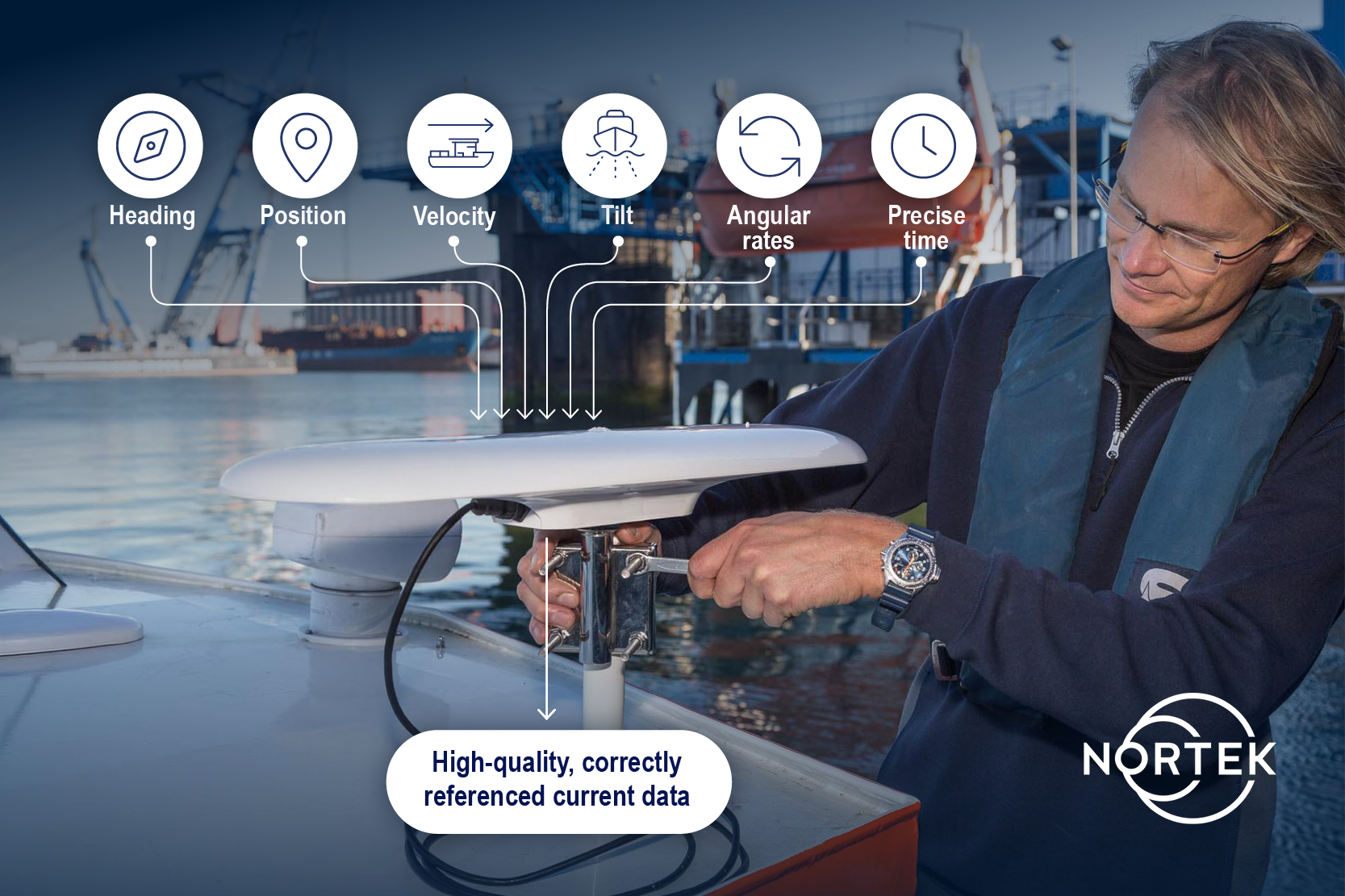
Heading, position, vessel velocity, tilt and precise timing all provide information needed to correctly reference the currents being measured. As conditions change, different sources of information can also become more important. Vessel motion may become more dynamic, while bottom conditions can affect the availability or reliability of a vessel-velocity reference using bottom track.
Bringing these different pieces of information together is therefore an important part of turning measurements from a moving platform into useful current data.
Different inputs, one measurement system
The VM Coastal system brings navigation, motion and timing information together as part of one integrated measurement system. A dedicated navigation & motion reference unit provides heading, position, vessel velocity, tilt, angular rates and precise timing alongside measurements from the Signature VM ADCP.
Each input has a different role in helping turn these measurements into high-quality, correctly referenced current data.
Heading and position provide the reference needed to place current measurements correctly in space. Pitch and roll provide information about the orientation of the ADCP, allowing measured velocities to be correctly transformed into XYZ/ENU coordinates. Precise time and PTP synchronization help ensure that ADCP measurements and the reference information used alongside them correspond to the correct moment.
When vessel movement becomes more dynamic, angular-rate information (how quickly something is rotating around an axis) can be used to compensate for rotational vessel motion.
GNSS velocity also provides an important vessel-velocity reference when Bottom Track is unavailable or becomes less reliable. This can be particularly relevant in rivers during high-flow conditions, where moving-bed conditions may occur. For example, with sediment suspension near the bottom or having soft, muddy areas close to the banks.
Having both sources available within the integrated VM Coastal measurement system provides greater flexibility to maintain reliable current measurements as conditions change.
The VM Coastal system benefits users by bringing together these inputs as an integrated system, using the information where it is needed to support data quality, without requiring the user to manage the individual inputs.
Handling the complexity behind the measurement
This integration becomes particularly valuable when working from small vessels and USVs, in rivers with changing bottom conditions, or wherever vessel motion and measurement conditions can change quickly.
Rather than requiring the user to piece together separate sources of navigation, timing, and motion information, the system is designed around the complete measurement chain.
The result is high-quality, correctly referenced current data that helps you focus on understanding the processes happening in the water, rather than the complexity behind the measurement.
Want to understand motion correction in more detail?
Vessel motion can introduce errors into current measurements, particularly when GNSS velocity is used for motion correction. Nortek uses angular-velocity information to account for rotational motion and improve vessel-velocity estimate used to correct ADCP data.
Our webinar explains the principles behind this approach and shows practical examples of how angular velocities and automatic lever-arm estimation can support more reliable current measurements from moving platforms.
Watch the webinar: Motion Correction for Vessel-Mounted ADCPs Using Angular Velocities


